
Did you know that in 1963, the United States Air Force accidentally dropped two nuclear bombs on a small town in North Carolina?
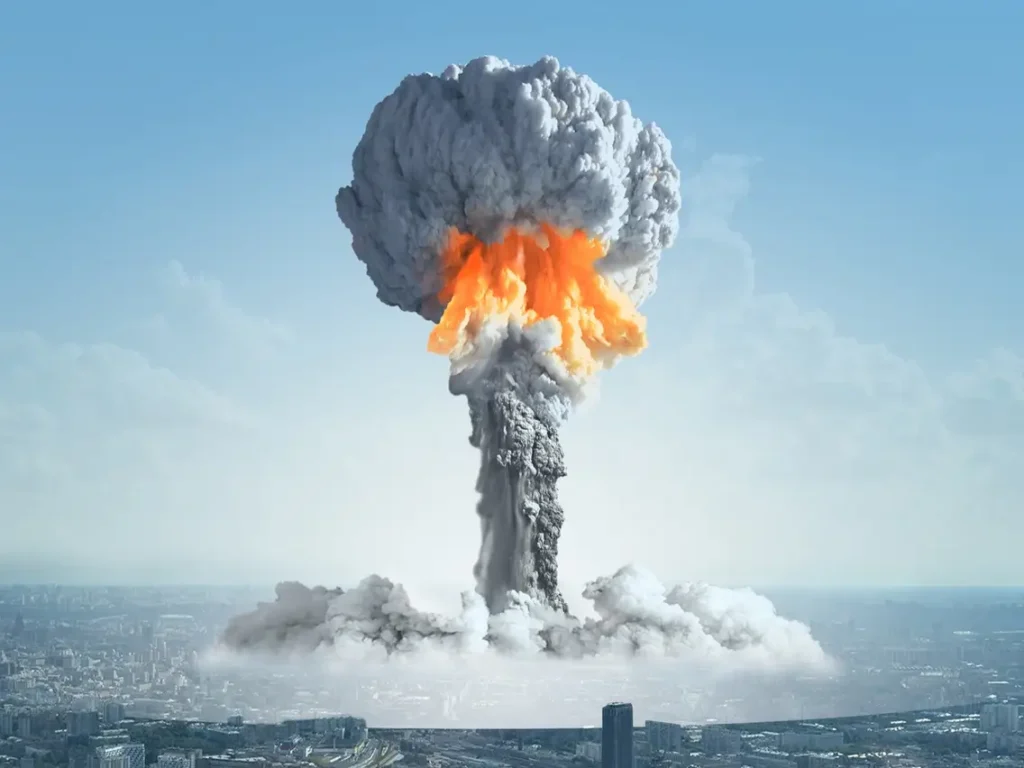
On January 23, 1961, a B-52 bomber carrying two Mark 39 hydrogen bombs was flying over Goldsboro, North Carolina, when it experienced a mid-air collision. The collision caused the two bombs to detach from the aircraft and fall towards the ground.
One of the bombs deployed its parachute, and its trigger mechanism failed, preventing it from detonating upon impact. However, the second bomb’s parachute did not deploy, and it crashed into a field at a speed of over 700 miles per hour, embedding itself 18 feet deep into the ground.
The bomb’s trigger mechanism was partially activated, but thankfully, the nuclear core did not explode, due to a series of fortuitous events. If the bomb had detonated, it would have had an explosive yield of 4 megatons, which is 250 times more powerful than the bombs that were dropped on Hiroshima and Nagasaki during World War II.
The United States government kept the incident classified for many years, and it was only in 2013, over fifty years later, that the full details of the accident were declassified and made public. It remains one of the closest calls in the history of the Cold War, and a chilling reminder of the dangers of nuclear weapons.